Current Projects
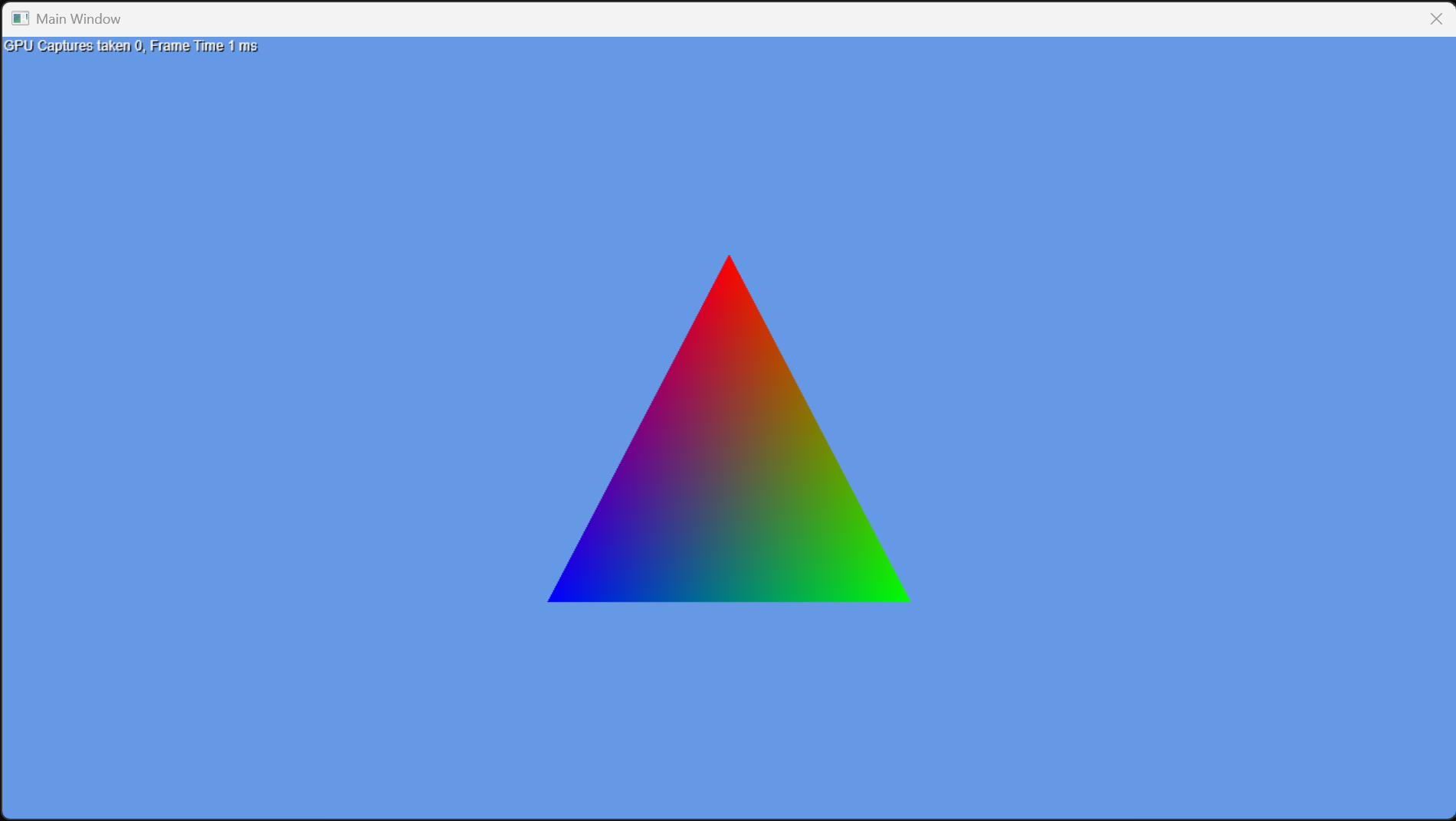
Skills: C++, DirectX 11, DirectX 12, Vulkan, Sharpmake
Team Size: 2
Goals
- Create functional graphics engine
- Learn new graphics APIs
Echoes in the Mist
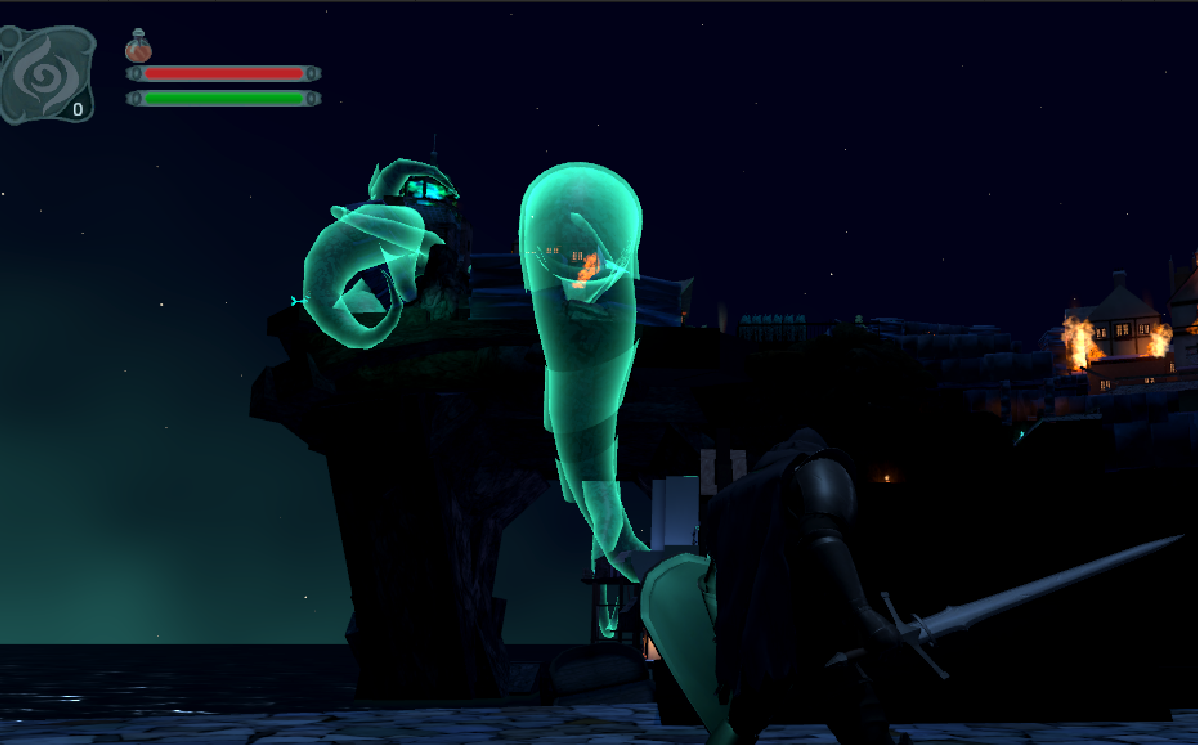
Skills: Unity, Shadergraph, 3D Coat, Blender
Team Size: 18
Goals
- Modify lighting for greater performance, visibility, and feel
- Redesign materials and textures for better visual consistency
Graphics
PS5 Engine & All-Wheel Brawl
Team Size: 7 (Game), 6 (Engine)
January - May 2024
This project consisted of two design teams with one core team for the engine. The core engine team would work together until the needs of the projects required more specific features.
The graphics portion has lambertian lighting, texture and model loading, skyboxes, directional and point lights, transparency, and a basic particle system. Earlier in development, PBR was implemented but both game teams did not need it.
DirectX 12
Team Size: Solo
January - May 2024
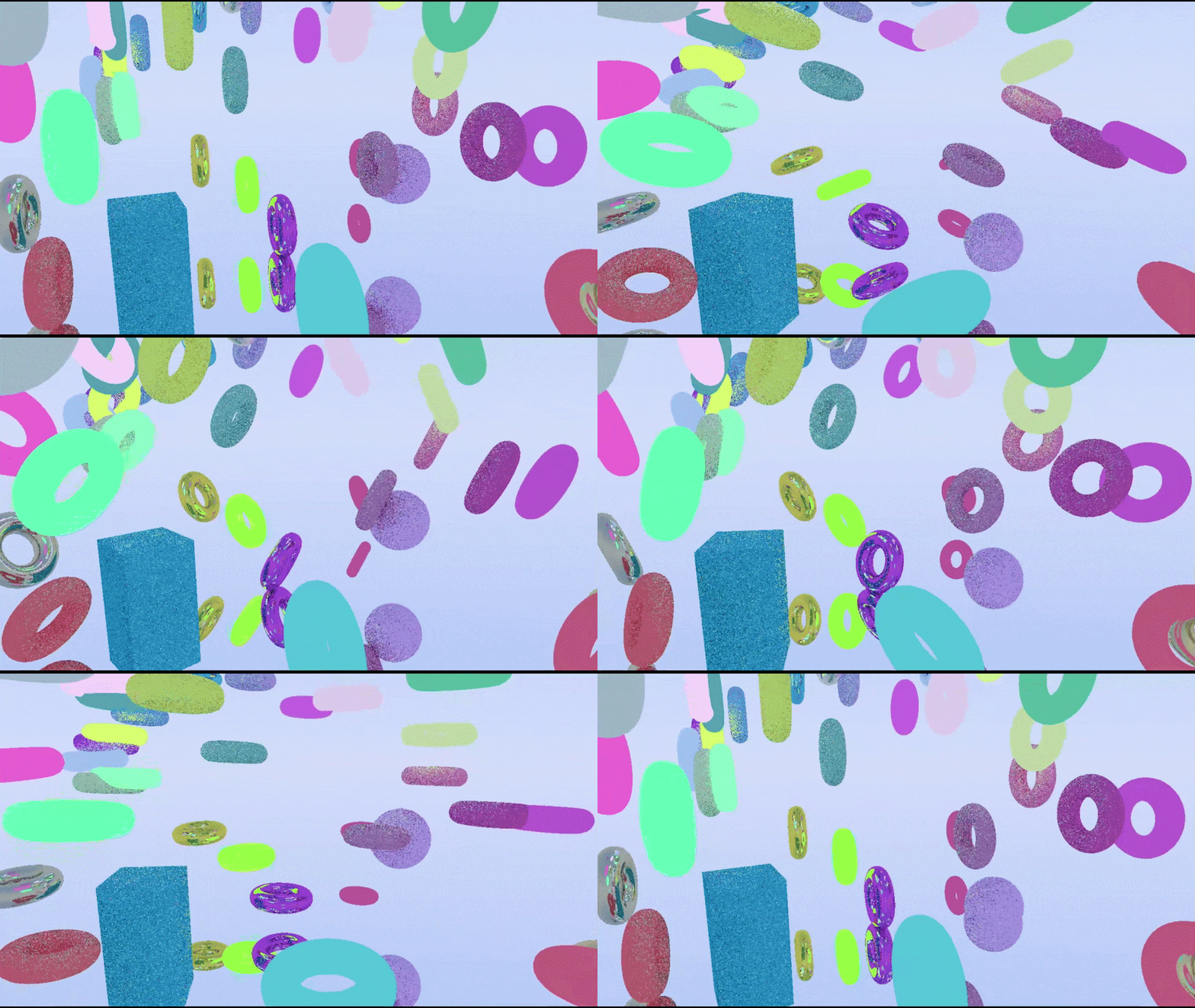
The DirectX 12 graphics engine was a continuous project in a graphics course at RIT. The main goal of the project was to slowly implement raytracing features, culminating in a project that displayed many of the core capabilities.
The beginning of Game Graphics Programming II focused on DirectX 12 working within the API and going through the basics of materials, lighting and skyboxes.
After the two projects had similar features, we moved on to the basics of ray tracing. As a class, we walked through both ray tracing as a console application and as a part of DX 12.
DirectX 11
Team Size: Solo
January - May 2023, April - May 2024
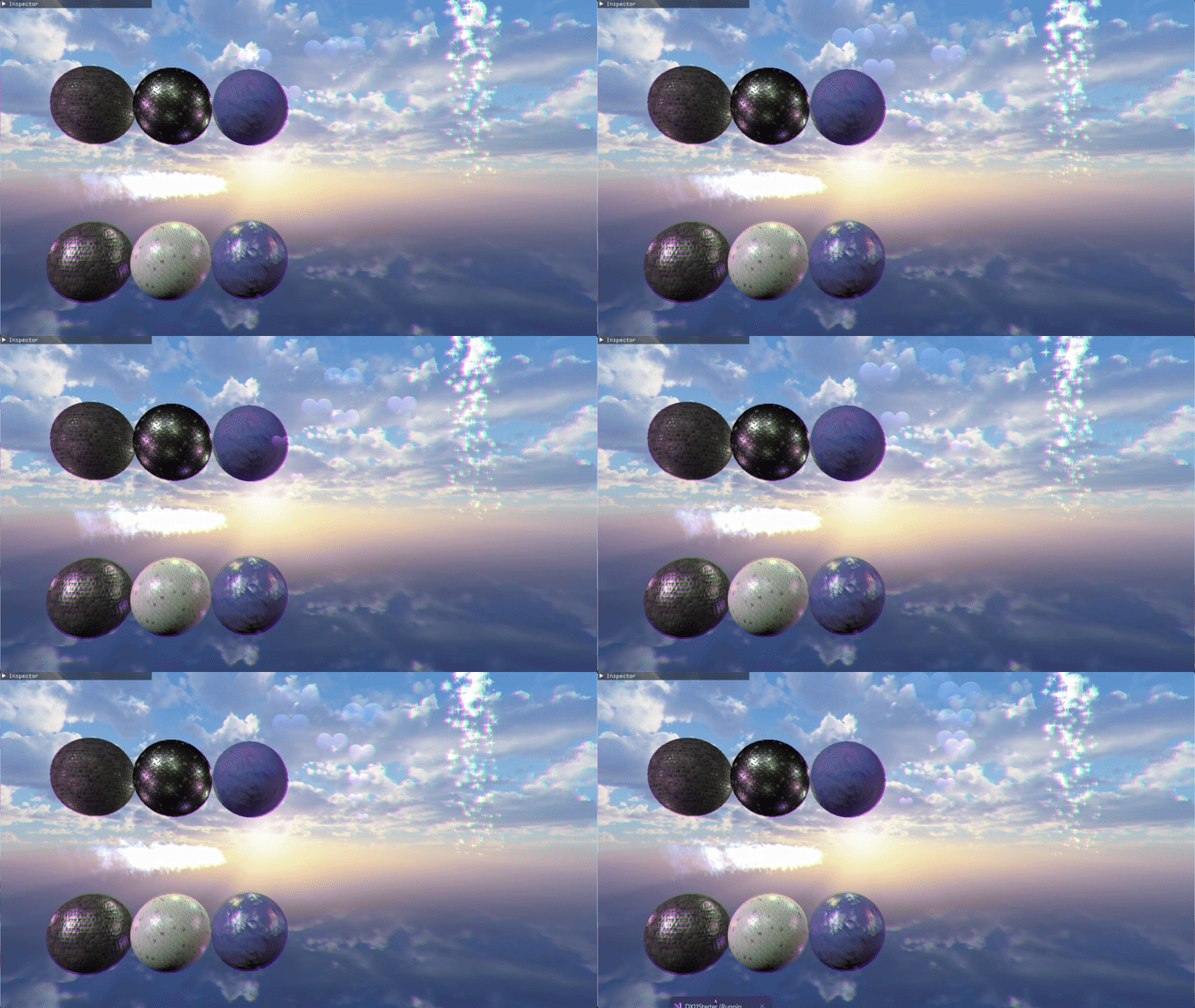
The DirectX 11 graphics engine was a continuous project over the course of two classes, Game Graphics Programming I and II.
Chris Cascioli's Game Graphics Programming I class focused on the basics of graphics engines in DirectX 11. Using Professor Cascioli's code as a base, the final DirectX project can load obj files, create directional and point lights, use multiple different types of texture maps to create materials, and has an adjustable radial blur around the camera.
The end of Game Graphics Programming II allowed us to choose to work in DX 11 to implement basic particle effects.
Technical Art
Changeling
Team Size: 80
May - August 2023
Changeling updates can be found here.
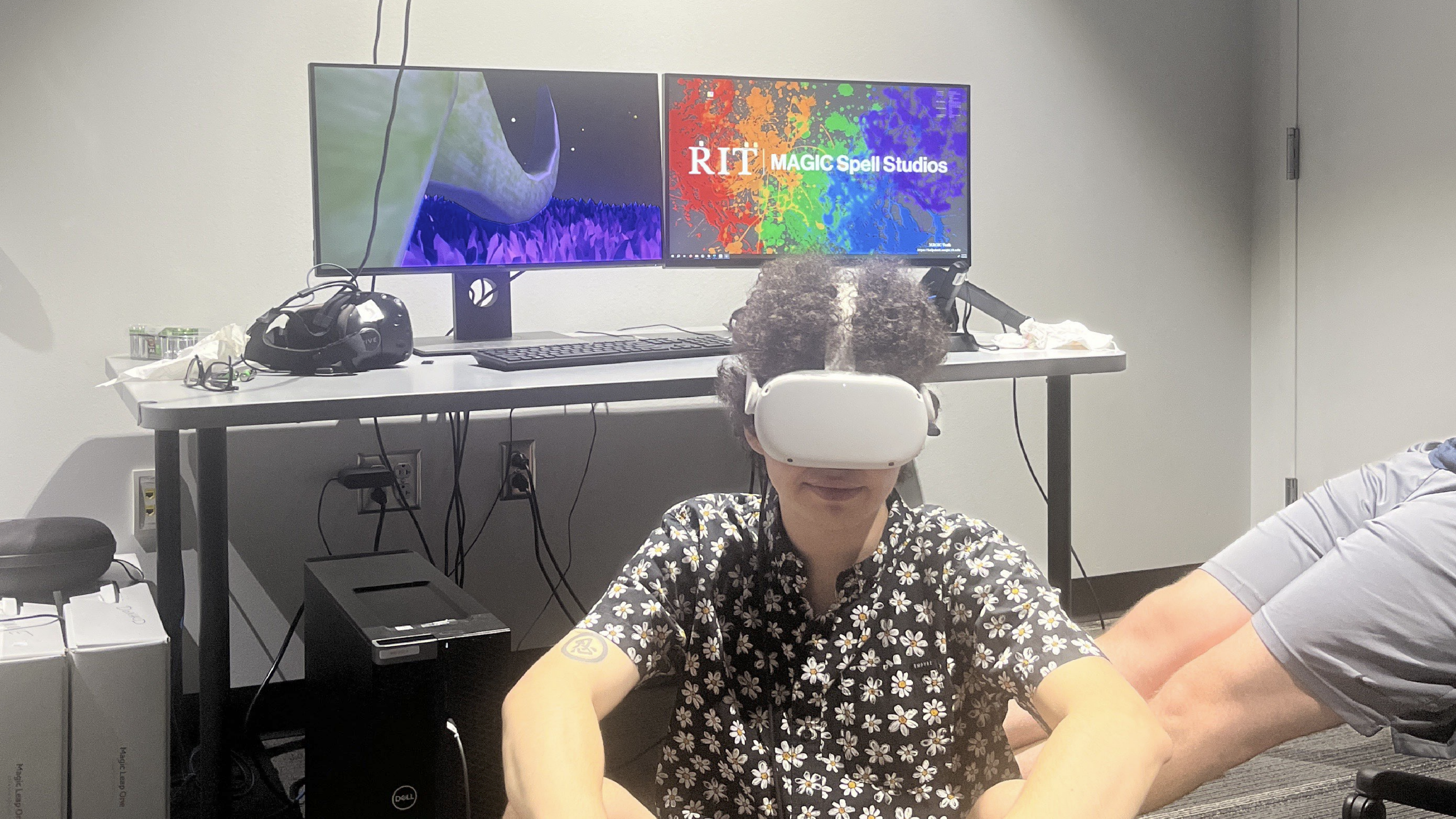
Changeling is an in-progress project in development at RIT. It's a VR mystery puzzle game where the player interacts with a family's minds to figure out what happened to the youngest child. Each level takes the player through a different character's mind, giving them insight into the family members and what might have happened.
My role as the lead technical artist on the project was to coordinate visual changes to the game to ensure that the game was ready for early access. The team increased the overall frame rates from as low as 6 to as high as 200 fps through material optimizations, blueprint modifications, additional model LODs, and lighting updates
Read More
Painted World: Neo-Versailles
Team Size: 30
August 2022 - May 2023
Neo-Versailles is a First-Person Puzzle RPG Horror where the player explores a destroyed palace of Versailles through corrupted paintings. The player utilizes paint to explore the world and defend themself from the Demon of Despair.
Neo-Versailles was designed by capstone students at the ArtCenter of California. As an RIT student, I was part of a team brought on to assist with the programming for the project.
The basis of the inventory code created by both myself and another RIT student, Megan Schier, was used in later ArtCenter projects.